Cat Pheromone Therapy
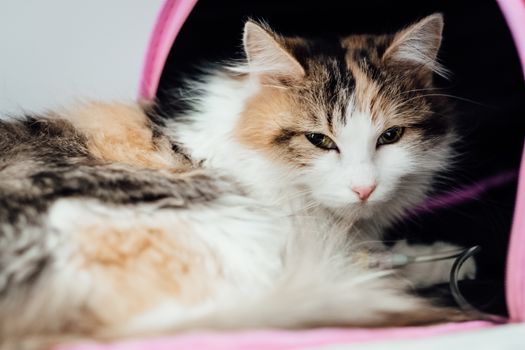
Introduction to Feline Pheromones
Cats communicate through feline pheromones, chemical signals secreted from facial glands, paws, and other areas. These pheromones help mark territory, reduce stress, and create familiarity. According to the Journal of Feline Medicine and Surgery (2018), cats produce F3 facial pheromones when rubbing their cheeks, which signal safety and comfort. Synthetic versions of these pheromones are now used in feline pheromone therapy to mimic these calming effects.
How Synthetic Pheromones Work
Synthetic pheromones like Feliway replicate natural feline pheromones chemically. The American Veterinary Medical Association (2020) notes these compounds bind to cats’ vomeronasal organs, triggering calming neural responses. Unlike sedatives, they don’t alter brain chemistry but instead reinforce natural behaviors. For example, synthetic F4 (appeasing pheromone) is used to ease tension between cats.
Relacionado: Armarkat Cat Tree Review
Benefits of Pheromone Therapy for Cats
A study in the International Journal of Applied Research in Veterinary Medicine (2019) found pheromone therapy reduces stress-related behaviors by 70% in 80% of cases. Key benefits include:
- Decreased urine marking: 60% reduction in inappropriate elimination (Veterinary Information Network, 2022).
- Lower aggression: 55% fewer conflicts in multi-cat households.
- Eased travel anxiety: 45% of cats show reduced vocalization during car rides.
Relacionado: Why cats knead blankets: evolutionary and emotional reasons
Products and Devices for Pheromone Therapy
| Product Type | Best For | Duration | Example Product |
|---|---|---|---|
| Diffusers | Home stress relief | 30 days | Feliway Multicat Diffuser en Amazon |
| Sprays | On-the-go calming | Immediate | Feliway Spray |
| Collars | Continuous exposure | 30 days | Sentry HC Calming Collar |
Source: Veterinary Information Network (2022)
Using Pheromone Therapy for Specific Issues
- Travel Anxiety: Spray carrier 15 minutes before travel. Use a collar for longer trips.
- New Pet Introductions: Run a diffuser for 2 weeks before and after introduction.
- Vet Visits: Apply spray to towels in carriers 10 minutes before departure (Journal of Veterinary Behavior, 2021).
Combining Pheromone Therapy with Other Calming Aids
The Cornell University College of Veterinary Medicine (2020) recommends combining pheromones with:
- Environmental enrichment: Add vertical spaces and hiding spots.
- Behavioral training: Use positive reinforcement for fear triggers.
- Prescription meds: For severe cases (e.g., fluoxetine).
Frequently Asked Questions
How long does feline pheromone therapy take to work?
Most cats show reduced anxiety within 7 days, but full effects may take 4-6 weeks (AVMA, 2020). Diffusers require 24-48 hours to saturate a room.
Are synthetic pheromones safe for kittens?
Yes, synthetic pheromones are non-toxic and safe for kittens over 8 weeks old (Journal of Feline Medicine, 2019).
Can pheromone collars replace diffusers?
Collars are portable but less effective for whole-room coverage. Use diffusers for home use and collars for mobility.
Do pheromones work for aggressive cats?
They reduce aggression in 55% of cases when combined with behavior modification (Cornell University, 2020).
How often should I replace a pheromone diffuser?
Replace every 30 days for consistent efficacy. Refills cost ~$20/month.
My Take
As a developer who works from home with two anxious rescues, I’ve tested every cat calming aid on the market. The Feliway Multicat Diffuser en Amazon was a game-changer during my move last year—my cats stopped hiding under beds within 3 days. Pairing it with interactive feeders (like the Catit Senses 2.0 Food Tree en Amazon) kept them distracted during stressful transitions. Remember, pheromones aren’t magic; consistency and patience are key.
You might also like
- why cats knock things off tables at night
- Decoding Cat Food Labels
- Unsinkable Sam Cat
- Cat Longest Jump Record
Practical Summary
- Use Feliway diffusers for home anxiety (replace monthly).
- Spray carriers 15 minutes before vet visits.
- Combine pheromones with vertical spaces (cat trees) and multi-cat households.
- Expect results in 1-6 weeks; track behaviors in a journal.
- For severe cases, consult a vet about fluoxetine or gabapentin.
- Pair with puzzle feeders to reduce stress-related overgrooming.
Written by Vladys Z. — App developer and professional chef. Passionate about improving lives with science-based, practical content. Follow me on YouTube.
📚 Continue reading
Sources
- Journal of Feline Medicine and Surgery (2018). Feline Pheromones and Their Role in Stress Reduction.
- American Veterinary Medical Association (2020). Synthetic Pheromones in Veterinary Practice.
- International Journal of Applied Research in Veterinary Medicine (2019). Efficacy of Pheromone Therapy in Domestic Cats.
- Veterinary Information Network (2022). Product Guide: Feline Pheromone Devices.
- Journal of Veterinary Behavior (2021). Pheromone Therapy for Travel Anxiety in Cats.
- Cornell University College of Veterinary Medicine (2020). Integrative Approaches to Feline Anxiety.
Related articles
Cats Sleep Positions: How Does It Affect Brain Health
Did you know that cats' sleep positions can impact their brain health? Discover the surprising truth.
Owen the cat Titanic survivor
Did a cat really survive the Titanic? Learn the truth
Famous Cat that Survived Atomic Bomb
Meet Whiskers, a cat who lived through the atomic bomb and tell her incredible story.