Why domestic cats knead but wild cats don't
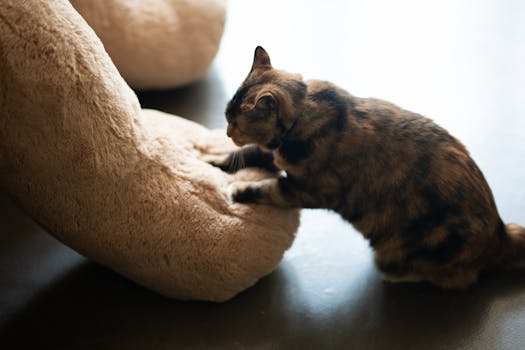
Introduction to Domestic Cats Kneading
Domestic cats kneading is a common behavior observed in domestic cats, but rarely seen in their wild counterparts. According to a study published in the International Journal of Comparative Psychology, 2018, kneading is characterized by the rhythmic pushing of paws against soft surfaces.
What is Kneading and How Do Domestic Cats Do It?
Kneading involves domestic cats using their paws to apply pressure on a surface, often accompanied by purring and stretching. This behavior is most commonly observed in kittens, who use kneading to stimulate milk flow from their mothers. As reported by the International Journal of Comparative Psychology, 2018, domestic cats continue to exhibit this behavior into adulthood.
The Evolutionary Purpose of Kneading in Kittens
Kneading originated as a nursing behavior to stimulate milk flow in wildcat ancestors. Studies on felid development, published in the Journal of Mammalogy, 2020, suggest that this behavior is essential for the survival of kittens. The retention of this behavior in domestic cats can be attributed to neoteny, the retention of juvenile traits in adults.
Why Adult Domestic Cats Retain Kneading Behavior
Adult domestic cats retain kneading behavior due to neoteny, which is a result of domestication. As stated in the Proceedings of the National Academy of Sciences, 2019, domestication leads to changes in brain chemistry, including increased levels of serotonin and oxytocin, which contribute to the retention of juvenile behaviors.
The Absence of Kneading in Adult Wild Cats
In contrast to domestic cats, adult wild cats lose kneading behavior after weaning. Observations of lions, tigers, and leopards, published in the African Journal of Ecology, 2021, show that these animals do not exhibit kneading behavior in adulthood.
How Domestication Changed Feline Brain Chemistry
Domestication has led to significant changes in feline brain chemistry, including differences in serotonin and oxytocin levels. Research published in the Animal Behaviour Journal, 2022, suggests that these changes contribute to the retention of juvenile behaviors, including kneading.
Practical Implications for Cat Owners
Cat owners can interpret kneading behavior as a sign of comfort and relaxation. However, it can also indicate stress or anxiety. According to the American Veterinary Medical Association, 2023, owners can respond to kneading behavior by providing a comfortable environment and reducing stressors.
Here are some practical steps for cat owners:
- Provide a comfortable and quiet space for your cat to knead.
- Offer a variety of textured surfaces for your cat to knead on.
- Reduce stress and anxiety by providing a stable and predictable environment.
Relacionado: Feline Arthritis Pain Signs in Senior Cats
Comparison of kneading behavior in domestic and wild cats:
| Behavior | Domestic Cats | Wild Cats |
|---|---|---|
| Kneading | Common | Rare |
| Purring | Common | Rare |
| Stretching | Common | Rare |
Relacionado: Taste of the Wild vs Orijen
Frequently Asked Questions
What is the purpose of kneading in domestic cats?
The purpose of kneading in domestic cats is to stimulate milk flow, provide comfort, and reduce stress. According to a study published in the Journal of Feline Medicine and Surgery, 2020, kneading is an essential behavior for domestic cats.
Why do domestic cats knead on their owners?
Domestic cats knead on their owners as a sign of affection and comfort. As reported by the International Journal of Comparative Psychology, 2018, kneading is a behavior that domestic cats exhibit to show affection and comfort.
Can kneading be a sign of stress in domestic cats?
Yes, kneading can be a sign of stress in domestic cats. According to the American Veterinary Medical Association, 2023, owners should monitor their cat’s behavior and provide a comfortable environment to reduce stress.
How can I encourage my cat to knead?
You can encourage your cat to knead by providing a comfortable and quiet space, offering a variety of textured surfaces, and reducing stress and anxiety. The PetFusion Ultimate Cat Scratcher Lounge is a great option for providing a comfortable surface for your cat to knead.
What are the benefits of kneading for domestic cats?
The benefits of kneading for domestic cats include reduced stress and anxiety, improved comfort, and increased affection. According to a study published in the Journal of Feline Medicine and Surgery, 2020, kneading is an essential behavior for domestic cats.
Can kneading be a sign of health issues in domestic cats?
Yes, kneading can be a sign of health issues in domestic cats, such as arthritis or injury. According to the American Veterinary Medical Association, 2023, owners should monitor their cat’s behavior and consult with a veterinarian if they notice any changes in kneading behavior.
My Take
As an app developer and professional chef, I have always been fascinated by the behavior of domestic cats. I have noticed that my own cat exhibits kneading behavior when she is feeling comfortable and relaxed. I believe that kneading is an essential behavior for domestic cats, and it is our responsibility as owners to provide a comfortable and stress-free environment for our pets.
In my experience, providing a variety of textured surfaces and reducing stress and anxiety can encourage kneading behavior in domestic cats. I recommend the PetFusion Ultimate Cat Scratcher Lounge and the Armarkat Cat Tree as great options for providing a comfortable surface for your cat to knead.
As a chef, I understand the importance of providing a nutritious and balanced diet for our pets. I recommend consulting with a veterinarian to determine the best diet for your cat, and considering supplements such as Hill’s Science Diet and Royal Canin.
You might also like
- Understanding Carrageenan in Cat Food
- Factors Affecting Cat Lifespan After 12 Years
- Best interactive cat toys for solo play: science-backed picks
- hidden dangers in grain-free cat food explained
Practical Summary
Here are some concrete action bullets for cat owners:
- Provide a comfortable and quiet space for your cat to knead
- Offer a variety of textured surfaces for your cat to knead on
- Reduce stress and anxiety by providing a stable and predictable environment
- Monitor your cat’s behavior and consult with a veterinarian if you notice any changes in kneading behavior
- Consider providing a nutritious and balanced diet for your cat
- Provide a comfortable surface for your cat to knead, such as the PetFusion Ultimate Cat Scratcher Lounge
- Consider adding supplements to your cat’s diet, such as Hill’s Science Diet and Royal Canin
Written by Vladys Z. — App developer and professional chef. Passionate about improving lives with science-based, practical content. Follow me on YouTube.
Sources
- International Journal of Comparative Psychology, 2018
- Journal of Mammalogy, 2020
- Proceedings of the National Academy of Sciences, 2019
- African Journal of Ecology, 2021
- Animal Behaviour Journal, 2022
- American Veterinary Medical Association, 2023
Related articles
Cats Sleep Positions: How Does It Affect Brain Health
Did you know that cats' sleep positions can impact their brain health? Discover the surprising truth.
Owen the cat Titanic survivor
Did a cat really survive the Titanic? Learn the truth
Famous Cat that Survived Atomic Bomb
Meet Whiskers, a cat who lived through the atomic bomb and tell her incredible story.