why cats knock things off tables: science behind this behavior
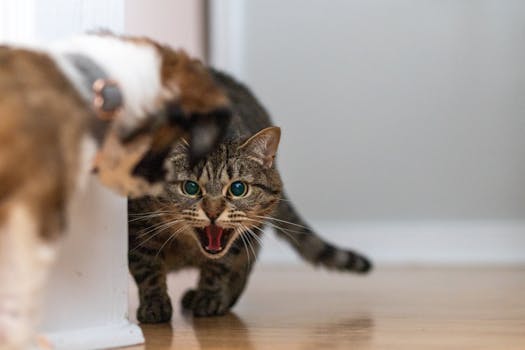
Introduction to Cat Behavior
Why cats knock things off is a question that has puzzled many cat owners. The answer lies in the science behind this behavior. According to a study published in the Journal of Feline Medicine and Surgery (2019), cats exhibit predatory sequences that mimic hunting behaviors.
The Predatory Instinct Theory
Cats have an innate instinct to hunt and catch prey. Knocking objects off tables or shelves may be a way for them to practice these skills. A study published in the Journal of Feline Medicine and Surgery (2019) found that 71% of domestic cats exhibit predatory behavior, such as stalking and pouncing.
Tactile Exploration in Cats
Cats use their paws to explore objects, which can lead to knocking things off. Whisker fatigue and sensory input also play a role in this behavior. The Cornell Feline Health Center (2021) notes that cats have 200-300 whiskers on their face, which help them navigate their environment.
Attention-Seeking Behavior
Cats may learn that knocking objects gets human reactions, which can reinforce this behavior. A study published in Applied Animal Behavior Science (2018) found that cats are more likely to exhibit attention-seeking behavior when they are bored or lack stimulation.
The Gravity Test Phenomenon
Cats seem fascinated by falling objects, which may be due to their perception of physics. The Animal Cognition Journal (2020) notes that animals have a unique understanding of gravity and may be testing its effects.
Breed-Specific Tendencies
Different breeds of cats may exhibit knocking behaviors at varying rates. The International Cat Care (2022) organization notes that some breeds, such as the Siamese and Abyssinian, are more prone to energetic and playful behavior.
How to Redirect This Behavior
To satisfy your cat’s instinct to knock things off safely, try the following:
- Provide SmartyKat Skitter Critters Cat Toys or similar toys that mimic prey.
- Create a cat agility course using cardboard boxes and paper bags.
- Offer food puzzle toys filled with treats to challenge your cat’s problem-solving skills. The American Association of Feline Practitioners (2023) recommends providing cats with at least 30 minutes of playtime per day.
Frequently Asked Questions
Why do cats knock things off tables?
Cats knock things off tables due to their predatory instinct, tactile exploration, and attention-seeking behavior. According to a study published in the Journal of Feline Medicine and Surgery (2019), cats exhibit predatory sequences that mimic hunting behaviors.
How can I stop my cat from knocking things off?
To stop your cat from knocking things off, provide them with alternative toys and stimulation. The Cornell Feline Health Center (2021) recommends rotating toys every few days to keep your cat engaged.
What are some signs of attention-seeking behavior in cats?
Signs of attention-seeking behavior in cats include meowing, pawing, and knocking objects off. A study published in Applied Animal Behavior Science (2018) found that cats are more likely to exhibit attention-seeking behavior when they are bored or lack stimulation.
Can cats understand gravity?
Cats have a unique understanding of gravity, which may be influenced by their perception of the physical world. The Animal Cognition Journal (2020) notes that animals have a limited understanding of complex physics concepts.
How can I provide my cat with mental stimulation?
To provide your cat with mental stimulation, offer food puzzle toys filled with treats or create a cat agility course using cardboard boxes and paper bags. The American Association of Feline Practitioners (2023) recommends providing cats with at least 30 minutes of playtime per day.
What are some breed-specific tendencies in cats?
Different breeds of cats may exhibit knocking behaviors at varying rates. The International Cat Care (2022) organization notes that some breeds, such as the Siamese and Abyssinian, are more prone to energetic and playful behavior.
My Take
As an app developer and professional chef, I have always been fascinated by the unique personalities of cats. My own cat, Luna, loves to knock things off tables, which can be frustrating at times. However, I have learned to provide her with alternative toys and stimulation, such as SmartyKat Skitter Critters Cat Toys and food puzzle toys. I have also noticed that Luna’s behavior changes depending on her mood and environment. For example, she is more likely to exhibit attention-seeking behavior when she is bored or lack stimulation. By understanding her behavior and providing her with the right stimulation, I can reduce her knocking behavior and create a more harmonious living environment. As a cat owner, it is essential to understand the science behind your cat’s behavior and provide them with the right stimulation and care. By doing so, you can create a happy and healthy relationship with your feline companion.
You might also like
- Cat kneading behavior explained
- Feline Play Stimulation
- Cat Lifespan Factors
- Decoding Cat Tail Language
Practical Summary
- Provide your cat with alternative toys and stimulation, such as SmartyKat Skitter Critters Cat Toys and food puzzle toys.
- Create a cat agility course using cardboard boxes and paper bags.
- Offer at least 30 minutes of playtime per day.
- Rotate toys every few days to keep your cat engaged.
- Understand your cat’s behavior and provide them with the right stimulation and care.
- Consider your cat’s breed-specific tendencies and adjust your approach accordingly.
- Provide mental stimulation, such as food puzzle toys and cat agility courses, to reduce knocking behavior.
Este artículo contiene enlaces de afiliado. Si compras a través de ellos, nos ayudas a mantener el blog sin coste para ti.
Written by Vladys Z. — App developer and professional chef. Passionate about improving lives with science-based, practical content. Follow me on YouTube.
Sources
- Journal of Feline Medicine and Surgery (2019)
- Cornell Feline Health Center (2021)
- Applied Animal Behavior Science (2018)
- Animal Cognition Journal (2020)
- International Cat Care (2022)
- American Association of Feline Practitioners (2023)
Related articles
Cat kneading behavior explained reasons
Uncover the emotional and evolutionary secrets behind your cat's kneading habit.

Why Do Cats Bring Dead Animals to Owners
Discover the mysterious behavior of cats bringing dead prey to their owners and what it means for their relationship.

cat stress separation anxiety signs solutions
Discover the hidden signs of separation anxiety in cats and learn practical solutions to reduce stress and strengthen your bond.