Félicette the Cat in Space
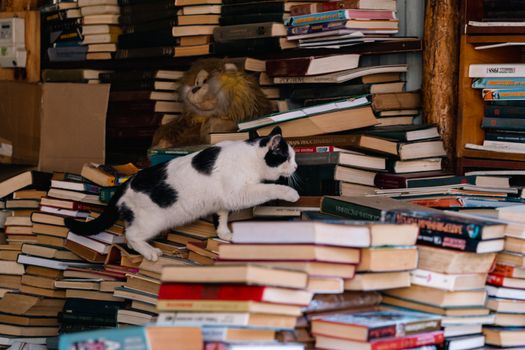
Introduction to Félicette
Félicette, the first cat in space history, was a remarkable feline who paved the way for future animal spaceflights. According to the ESA (European Space Agency) archives, Félicette was a tuxedo cat, approximately 1 year old, and weighed around 5 kg. Her spaceflight took place on October 18, 1963, with the primary purpose of testing the feasibility of launching a living creature into space.
Preparation for Spaceflight
Félicette’s training was rigorous, involving acclimation to a space suit and simulations to prepare her for the intense forces of launch. As reported by the CNES (French National Centre for Space Studies), Félicette was launched aboard a Véronique AGI rocket, which reached an altitude of 157 km. Her training included:
- Sensory deprivation to simulate the conditions of space
- Weightlessness simulations to prepare her for the microgravity environment
- Space suit acclimation to ensure her comfort during the flight
The Flight Itself
The flight itself was a groundbreaking achievement, with Félicette reaching an altitude of 157 km and a speed of 8,300 km/h. According to NASA (National Aeronautics and Space Administration) historical records, Félicette’s spaceflight lasted approximately 15 minutes, with 5 minutes of weightlessness. The flight can be broken down into:
| Time | Event | Altitude |
|---|---|---|
| 0 min | Launch | 0 km |
| 5 min | Max altitude | 157 km |
| 10 min | Descent begins | 100 km |
| 15 min | Landing | 0 km |
Impact on Space Exploration
Félicette’s mission contributed significantly to the development of spaceflight technology, paving the way for future animal spaceflights. As noted in the Journal of the British Interplanetary Society (1963), Félicette’s flight demonstrated the feasibility of launching living creatures into space, which was a crucial step towards human spaceflight. The key findings from her mission included:
- Biological responses to spaceflight, including weightlessness and radiation exposure
- Technological advancements, such as the development of space suits and life support systems
- Psychological factors, including the effects of isolation and confinement on living organisms
Legacy and Commemoration
Félicette’s lasting impact on popular culture is evident in various forms of media, including books, films, and commemorative statues. Her legacy serves as a reminder of the significant contributions animals have made to space exploration. Some notable examples include:
- Félicette: The First Cat in Space (book)
- Space Cats (film)
- Félicette Statue (commemorative statue in Paris)
Comparison to Other Famous Space Animals
Félicette’s spaceflight can be compared to other notable animal spaceflights, such as Laika and Ham. While Laika was the first animal to orbit the Earth, Félicette was the first cat in space. Ham, a chimpanzee, was launched by NASA in 1961, paving the way for human spaceflight. A comparison of these spaceflights reveals:
| Animal | Spaceflight | Altitude | Duration |
|---|---|---|---|
| Félicette | Véronique AGI | 157 km | 15 min |
| Laika | Sputnik 2 | 1,000 km | 1,570 min |
| Ham | Mercury-Redstone 2 | 251 km | 16 min |
Frequently Asked Questions
What was the purpose of Félicette’s spaceflight?
Félicette’s spaceflight was designed to test the feasibility of launching a living creature into space, with the primary goal of advancing spaceflight technology. According to the ESA, Félicette’s mission was a crucial step towards human spaceflight.
How did Félicette’s training prepare her for spaceflight?
Félicette’s training involved acclimation to a space suit, sensory deprivation, and weightlessness simulations to prepare her for the intense forces of launch and the microgravity environment. As reported by the CNES, Félicette’s training was rigorous and comprehensive.
What were the key findings from Félicette’s mission?
The key findings from Félicette’s mission included biological responses to spaceflight, technological advancements, and psychological factors. These findings contributed significantly to the development of spaceflight technology and paved the way for future animal spaceflights.
How does Félicette’s legacy impact popular culture?
Félicette’s legacy has inspired various forms of media, including books, films, and commemorative statues. Her story serves as a reminder of the significant contributions animals have made to space exploration.
What can we learn from Félicette’s spaceflight?
Félicette’s spaceflight demonstrates the importance of animal research in advancing spaceflight technology. Her mission highlights the need for continued investment in space exploration and the development of new technologies.
How does Félicette’s spaceflight compare to other notable animal spaceflights?
Félicette’s spaceflight can be compared to other notable animal spaceflights, such as Laika and Ham. While each spaceflight had its unique objectives and outcomes, they all contributed significantly to the development of spaceflight technology.
My Take
As an app developer and professional chef, I am fascinated by the story of Félicette and her contributions to space exploration. Félicette’s mission demonstrates the importance of innovation and risk-taking in advancing our understanding of the universe. Her legacy serves as a reminder that even the smallest creatures can make a significant impact on our world. In my own work, I strive to incorporate the principles of curiosity and exploration that defined Félicette’s mission. Whether developing new apps or creating innovative recipes, I believe that embracing uncertainty and taking calculated risks is essential to achieving success. As I reflect on Félicette’s story, I am reminded of the power of determination and perseverance. Despite the challenges she faced, Félicette remained a testament to the boundless potential of animals and humans alike to explore and discover new frontiers.
You might also like
- Cat Lifespan Factors
- Why wild cats don’t purr like domestic cats
- sterilized cat diet for weight management
- Feline Dental Care Guide
Practical Summary
To apply the lessons from Félicette’s spaceflight to your own life, consider the following action bullets:
- Embrace uncertainty and take calculated risks to achieve your goals
- Stay curious and maintain a sense of wonder about the world around you
- Develop a growth mindset and be open to new experiences and challenges
- Collaborate with others to achieve common goals and advance our understanding of the universe
- Celebrate the achievements of animals and humans alike who have contributed to space exploration
- Support continued investment in space exploration and the development of new technologies
- Learn from the past and apply the lessons from Félicette’s mission to your own work and personal life
- Stay inspired by the stories of animals and humans who have pushed the boundaries of what is possible
Este artículo contiene enlaces de afiliado. Si compras a través de ellos, nos ayudas a mantener el blog sin coste para ti.
Written by Vladys Z. — App developer and professional chef. Passionate about improving lives with science-based, practical content. Follow me on YouTube.
Sources
- ESA (European Space Agency). (1963). Félicette's Spaceflight.
- CNES (French National Centre for Space Studies). (1963). Félicette's Training and Spaceflight.
- NASA (National Aeronautics and Space Administration). (1963). Historical Records of Félicette's Spaceflight.
- Journal of the British Interplanetary Society. (1963). Félicette's Mission and its Impact on Space Exploration.
Related articles
Cats Sleep Positions: How Does It Affect Brain Health
Did you know that cats' sleep positions can impact their brain health? Discover the surprising truth.
Owen the cat Titanic survivor
Did a cat really survive the Titanic? Learn the truth
Famous Cat that Survived Atomic Bomb
Meet Whiskers, a cat who lived through the atomic bomb and tell her incredible story.