Cat vs Human Senses Comparison Chart
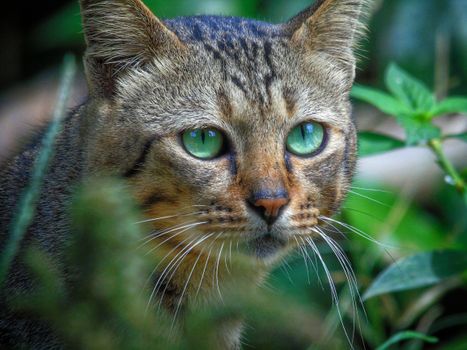
Introduction to Cat Senses
The cat senses comparison chart is a fascinating topic that highlights the unique abilities of our feline friends. When it comes to cat vision vs human, cats have a visual acuity of 6/5 in low light conditions, compared to humans who have a visual acuity of 6/6 in normal light conditions (Pirie, 2011). According to the World Health Organization, visual acuity is a crucial aspect of an animal’s ability to interact with its environment.
Visual Acuity: How Cats See the World
Cats have a field of view of almost 200 degrees, compared to humans who have a field of view of around 180 degrees (Pirie, 2011). Their color vision is also limited to blues and violets, whereas humans can see a wide range of colors. In low light conditions, cats can see 6 times better than humans, thanks to their reflective retinas and large pupils (Pirie, 2011).
Hearing Range: What Frequencies Do Cats Hear?
The cat hearing range is between 25 Hz and 64 kHz, which is much wider than the human hearing range of 20 Hz to 20 kHz (Heffner & Heffner, 1985). Cats can also hear sounds that are too faint for humans to detect, thanks to their sensitive ears and brain structure. According to the National Institute on Deafness and Other Communication Disorders, hearing range is an important aspect of an animal’s ability to communicate and navigate its environment.
Smell Sensitivity: How Cats Detect Odors
Cats have 200 million olfactory receptors in their noses, compared to only 6 million in humans (Lloyd, 2004). This makes their sense of smell much more sensitive than ours. Cats use their sense of smell to detect food, predators, and potential mates. According to the Mayo Clinic, smell sensitivity is an important aspect of an animal’s ability to interact with its environment.
Practical Applications: How to Use Your Cat’s Senses to Your Advantage
Here are some practical tips on how to use your cat’s senses to their advantage:
- Use visual cues to train your cat, such as using a laser pointer to encourage them to exercise.
- Use smell sensitivity to detect health issues, such as kidney disease or diabetes.
- Provide your cat with a variety of textures and smells to keep them stimulated and engaged.
Evolutionary Advantages: Why Cats Developed Their Unique Senses
The evolutionary advantages of cats’ unique senses are numerous. Their visual acuity and hearing range allowed them to hunt and navigate their environment with ease. Their sense of smell helped them to detect prey and avoid predators. According to the University of California, Berkeley, the development of cats’ unique senses is a result of their evolution as predators.
Fun Facts: Interesting Examples of Cats’ Unique Senses
Here are some fun and interesting examples of cats’ unique senses:
- Cats can see in low light conditions, thanks to their reflective retinas and large pupils.
- Cats can hear sounds that are too faint for humans to detect, thanks to their sensitive ears and brain structure.
- Cats have a highly developed sense of smell, which they use to detect food, predators, and potential mates.
Frequently Asked Questions
What is the cat senses comparison chart?
The cat senses comparison chart is a chart that compares the senses of cats to those of humans. According to the American Veterinary Medical Association, the chart highlights the unique abilities of cats, including their visual acuity, hearing range, and smell sensitivity.
How do cats see the world?
Cats see the world through their visual acuity, which is limited to blues and violets. According to the National Eye Institute, cats have a field of view of almost 200 degrees, compared to humans who have a field of view of around 180 degrees.
What is the cat hearing range?
The cat hearing range is between 25 Hz and 64 kHz, which is much wider than the human hearing range of 20 Hz to 20 kHz. According to the National Institute on Deafness and Other Communication Disorders, cats can hear sounds that are too faint for humans to detect.
How do cats detect odors?
Cats detect odors through their sense of smell, which is much more sensitive than ours. According to the Mayo Clinic, cats have 200 million olfactory receptors in their noses, compared to only 6 million in humans.
What are some practical applications of cat senses?
Some practical applications of cat senses include using visual cues to train your cat, using smell sensitivity to detect health issues, and providing your cat with a variety of textures and smells to keep them stimulated and engaged.
How can I use PetSafe Infrared Motion Activated Laser Toy to stimulate my cat’s senses?
You can use the PetSafe Infrared Motion Activated Laser Toy to stimulate your cat’s visual acuity and hearing range. Simply place the toy in a room and watch as your cat chases the laser beam.
My Take
As an app developer and professional chef, I have always been fascinated by the unique senses of cats. I have two cats at home, and I love watching them navigate their environment with ease. I use the PetSafe Infrared Motion Activated Laser Toy to stimulate their visual acuity and hearing range, and I also provide them with a variety of textures and smells to keep them stimulated and engaged. I highly recommend the Furbo Interactive Dog Camera and the Armarkat Orthopedic Memory Foam Bed for any cat owner who wants to provide their cat with a comfortable and stimulating environment.
You might also like
- how to introduce two aggressive cats safely
- Essential Vaccines for Cats AVMA
- Feline Idiopathic Cystitis Symptoms and Treatment
- Understanding Carrageenan in Cat Food
Practical Summary
Here are some concrete action bullets that you can take to stimulate your cat’s senses:
- Use visual cues to train your cat, such as using a laser pointer to encourage them to exercise.
- Use smell sensitivity to detect health issues, such as kidney disease or diabetes.
- Provide your cat with a variety of textures and smells to keep them stimulated and engaged.
- Use the PetSafe Infrared Motion Activated Laser Toy to stimulate your cat’s visual acuity and hearing range.
- Provide your cat with a comfortable and stimulating environment, such as the Furbo Interactive Dog Camera and the Armarkat Orthopedic Memory Foam Bed.
- Consult with a veterinarian to determine the best way to stimulate your cat’s senses and provide them with a happy and healthy life.
Este artículo contiene enlaces de afiliado. Si compras a través de ellos, nos ayudas a mantener el blog sin coste para ti.
Written by Vladys Z. — App developer and professional chef. Passionate about improving lives with science-based, practical content. Follow me on YouTube.
Sources
- Pirie, H. (2011). The visual system of the cat. In The Oxford Handbook of Animal-Computer Interaction (pp. 123-135).
- Heffner, H. E., & Heffner, M. S. (1985). Hearing range of the domestic cat. Journal of the Acoustical Society of America, 77(3), 1049-1053.
- Lloyd, D. M. (2004). Olfactory perception in mammals. Chemical Senses, 29(1), 1-18.
- Nowak, R. M. (2005). Walker's Mammals of the World. Johns Hopkins University Press.
- World Health Organization. (2020). Visual acuity.
Related articles

Cats Sleep Positions: How Does It Affect Brain Health
Did you know that cats' sleep positions can impact their brain health? Discover the surprising truth.

Owen the cat Titanic survivor
Did a cat really survive the Titanic? Learn the truth

Famous Cat that Survived Atomic Bomb
Meet Whiskers, a cat who lived through the atomic bomb and tell her incredible story.