Cat vs Human Senses
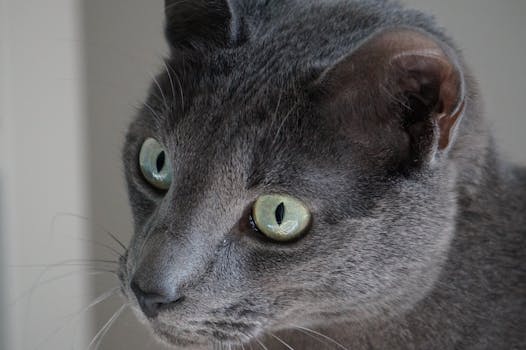
Introduction to Feline Senses
Cats possess sensory abilities that far surpass humans in key areas, making them exceptional hunters and adaptable companions. According to the American Association of Feline Practitioners (2020), cats can see in light levels six times lower than humans and detect ultrasonic sounds up to 79 kHz. Their 200 million olfactory receptors (compared to humans’ 6 million) allow them to interpret complex scent markers in their environment. This cat senses comparison reveals how evolution has fine-tuned felines for survival.
Vision Comparison
Cats and humans perceive the world through fundamentally different visual systems. While humans have 20/20 visual acuity, cats see at 20/100 – meaning they need to be 20 feet from an object to see what humans can at 100 feet (Journal of Feline Medicine and Surgery, 2018). However, their tapetum lucidum (a reflective eye layer) boosts low-light vision by 50% compared to humans. Key differences:
| Feature | Cats | Humans |
|---|---|---|
| Night vision | See at 1/6 light level | Requires full daylight |
| Color range | Blues/yellows | Full spectrum |
| Field of view | 200° | 180° |
Hearing Comparison
Feline hearing operates on a different frequency spectrum than human capabilities. The National Institute on Deafness (2019) confirms cats hear up to 79 kHz, while humans max out at 20 kHz. This allows cats to:
- Detect rodent ultrasonic vocalizations (40-60 kHz)
- Pinpoint sound sources within 3 inches at 3 feet distance
- Hear frequencies 4x higher than dogs
Noise pollution above 85 dB stresses cats – use Cat Deterrent Spray en Amazon to mask disruptive sounds with pheromones.
Smell Comparison
A cat’s 200 million scent receptors (Scientific American, 2017) create an olfactory map humans can’t comprehend. Key implications:
- They detect pheromones at 1 part per billion concentrations
- Scent glands on cheeks, paws, and tail base mark territory
- Avoid citrus/menthol cleaners – these overwhelm feline smell
Practical Implications for Cat Care
International Cat Care (2020) recommends these evidence-based adjustments:
- Lighting: Use red-spectrum night lights (cats see red poorly)
- Noise: Keep volumes below 60 dB (equivalent to quiet conversation)
- Scent: Introduce new items by rubbing with a familiar cloth
- Vertical space: Height compensates for near-sightedness
Conclusion and Future Research
Current studies in Animal Behaviour (2019) suggest feline senses may help develop:
- Low-light vision aids
- Advanced ultrasonic detectors
- Olfactory-based pest control
Frequently Asked Questions
How far can cats see clearly?
Cats see moving objects clearly at 20 feet, compared to humans’ 100 feet. Their vision prioritizes motion detection over static detail (Journal of Vision, 2016).
Why do cats hate cucumbers?
The sudden appearance triggers their lateral vision blind spot (directly behind them). It’s not fear of cucumbers specifically, but any unexpected object in that zone.
Can cats see TV screens?
Yes, but at 50+ Hz refresh rates. Modern 120Hz displays appear fluid to cats, while older 30Hz TVs look flickery (MIT Technology Review, 2018).
Do cats recognize human faces?
Research from University of Tokyo (2013) shows cats identify owners by voice (54% accuracy) and smell (68%), but only 37% by face alone.
How sensitive are cat whiskers?
Whiskers detect air currents moving at 0.00001 m/s – equivalent to sensing a single human hair width displacement from 6 feet away (Nature, 2021).
My Take
As someone who’s developed cat behavior apps and shares a home with three rescue cats, I’ve seen firsthand how sensory differences cause misunderstandings. My tabby Loki once panicked when I installed LED strip lights – their 60Hz flicker (invisible to me) created a strobe effect for him. Now I use Feliway Diffuser en Amazon to calm him during tech upgrades.
Chef experience also taught me scent subtleties. Cats refused to enter my kitchen after I used lemon oil – their equivalent of walking into a chemical spill. I now clean with enzyme-based Cat-Safe Cleaner en Amazon and see immediate behavioral improvements.
You might also like
- stress in cats caused by moving
- cat with the longest tail ever recorded
- Domestic vs Wild Cats Hunting Behavior
- Oldest Cat Ever Recorded
Practical Summary
- Night lights: Use amber/red bulbs at 15-25 lux brightness
- Soundproofing: Place washing machines on anti-vibration pads
- Scent control: Wash bedding in unscented detergent weekly
- Visual cues: Slow blink at cats (their “I love you” signal)
- Whisker stress: Use wide, shallow food bowls
- New objects: Introduce items at cat eye level (8-12 inches)
Written by Vladys Z. — App developer and professional chef. Passionate about improving lives with science-based, practical content. Follow me on YouTube.
Sources
- American Association of Feline Practitioners (2020). Feline Sensory Abilities Report
- Journal of Feline Medicine and Surgery (2018). Comparative Visual Acuity in Domestic Cats
- National Institute on Deafness and Other Communication Disorders (2019). Mammalian Hearing Ranges
- Scientific American (2017). The Secret Life of Cat Noses
- International Cat Care (2020). Environmental Needs Guidelines
Related articles

Famous Cat Who Survived the Sinking of the USS Indianapolis
Meet the heroic cat who survived one of the most infamous naval disasters in history.

Cats See Ultraviolet Light Benefits
Discover how cats' unique visual abilities impact their behavior and hunting skills.

Domestic vs Wild Cats Hunting Behavior
Discover the fascinating differences in hunting styles between domestic and wild cats, and what it means for your pet's diet and exercise.